Rue Yves Saint Laurent, Marrakech (near Gueliz district

The Majorelle Garden (Jardin Majorelle) is one of the most beautiful and famous attractions in Marrakech, Morocco a peaceful oasis full of color, art, and history.

Here’s a detailed overview:

History

The garden was created by Jacques Majorelle, a French painter, in the 1920s and 1930s.

He was inspired by Moroccan landscapes and devoted over 40 years to developing this exotic garden around his villa.

After Majorelle’s death, the property fell into neglect until it was purchased and restored in the 1980s by fashion designer Yves Saint Laurent and his partner Pierre Bergé.

Today, it is owned by the Yves Saint Laurent Foundation.

Design and Features

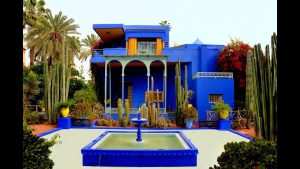
The garden is famous for its vivid blue color, known as “Majorelle Blue,” used throughout the buildings and fountains.

It features exotic plants from five continents, including cacti, bamboo, palms, and bougainvillea.

The layout combines Art Deco style with Islamic architectural elements.

You’ll find peaceful paths, pools, and water features surrounded by lush greenery.

What to See

The Garden Itself:
Wander through the beautifully landscaped paths, filled with rare plants and birds.

The Berber Museum:
Located inside Majorelle’s old studio, it displays traditional Berber art, jewelry, textiles, and artifacts.

Yves Saint Laurent Memorial:
A small memorial honors the designer, whose ashes were scattered in the garden.

Boutique & Café Majorelle:
Enjoy a coffee or shop for stylish souvenirs inspired by the garden’s design.

Visitor Information

Location: Rue Yves Saint Laurent, Marrakech (near Gueliz district)

Opening Hours: Usually 8:00 AM – 6:00 PM (may vary by season)

Tickets: bOOK IT ONLINE

Garden: around 150 MAD

Berber Museum: additional fee

Best Time to Visit: Morning or late afternoon (to avoid crowds and heat)

Travel Tips

Go early to enjoy the quiet atmosphere before large tour groups arrive.

Combine your visit with the nearby Yves Saint Laurent Museum (Musée YSL Marrakech).

Bring a camera — the colors and design are perfect for photos!

Wear comfortable shoes and light clothing.

4-Day Tour Essaouira to Sahara Desert ends in Fes


Best place in Moroco to stay is essaouira in the summer time


Day 1: Essaouira – Marrakech – Ait Ben Haddou Kasbah – Ouarzazate

Today, we leave Essaouira at 8:00 a.m., travel Marrakech, and proceed to Ouarzazate along the breathtaking vistas of the Tizi n’Tichka Road. We will have a lunch break in Telouet’s Kasbah. Then we’ll continue our journey toward Ait Ben Haddou. Ait Benhaddou and Ouarzazate are well-known filming locations, having appeared in films such as Gladiator, Lawrence of Arabia, etc…

Day 2: Ouarzazate – Todgha Gorges – Erfoud – Merzouga Desert.

We will leave Ouarzazate early in the morning to travel to Merzouga. But first, we’ll go to the Kasbah of Taourirt. Then, we’ll make a quick trip to Rose Valley and  Dades Valley. We will next spend some time at Toudra Gorges and eat lunch before going for a walk through the tight gorges. Then, we’ll travel to Erfoud via Tinjdad, which is located in a fossil-rich area. We will park our car at Merzouga and ride camels to the Erg Chebbi Dunes. After admiring the breathtaking sunset over a high dune, we will travel to the desert camp to spend the night with the band of nomad musicians in their tent.

Day 3: Merzouga, Sahara Desert, Camel Trek


After breakfast in your riad, you can have a short explore of the local region before the commencement of your camel ride. You will Visit the Gnawa people, originating from Mali, Senegal, and Sudan, in their village of Khamlia to learn about their music and way of life. Later, we will go to the desert to visit nomadic families and learn about their way of life. Today’s lunch will be a classic Berber cuisine (Berber Pizza). You will also be able to explore the old city of Rissani, which was founded by the Alaouite dynasty, Morocco’s current governing royal family. Rissani is bordered by over 360 ksars (fortified villages with several towers) and has a large souk (an open market) that is held three times every week. This was once known as Sijilmassa, and it served as a rendezvous point for salt caravans traveling from Tombouctou, Mali. Here you will walk. Through the souk, selling spices, veggies, and garments. Continue your journey back to Merzouga. In the afternoon, you will ride a camel with an experienced guide to explore the tallest dunes in Morocco, including the opportunity to watch the sunset. Dinner and overnight stay at the Berber camp in Merzouga’s Erg Chebbi dunes.

DAY 4: MERZOUGA-ZIZ VALLEY-MIDELT-CEDAR FOREST-AZROU-IFRANE-FES

Today, we will leave the Sahara Desert and go via the Tafilalt region and the middle Atlas Mountains. After a quick lunch break in the apple village of Midelt, we’ll visit the Monkeys of the Cedar Forest near Azrou before returning to Ifran. Later in the afternoon will arrive at Fez where it end of our 4 days tour from essaouira.

What’s Included?

Hotel/Riad pickup and drop-off

3 nights 4 days of lodging in three separate places with full board.

Transportation in a private, air-conditioned minivan or SUV with an English-speaking driver/guide.

Camel Ride Tour Experience / Breakfasts, Lunches, Dinners, and Drinks

Professional local guide (Moroccan history and heritage places).

All entry costs, municipal taxes, and gasoline are included.

Breakfast (3) & Dinner (3).

What is not included?

Lunch & Drinks

Tipping and gratuities for your driver are optional.


🏰 Top Attractions in Essaouira

Essaouira is one of Morocco’s most charming coastal cities — a blend of culture, history, and seaside beauty. Known for its laid-back atmosphere, whitewashed walls, blue doors, and strong Atlantic winds, Essaouira is often called the “Wind City of Africa.” Here’s a guide to the top things to visit and do in Essaouira:

1. Medina of Essaouira (Old Town) – UNESCO World Heritage Site

  • Wander through the narrow streets filled with blue-and-white houses, artisan workshops, spice shops, and local art galleries.

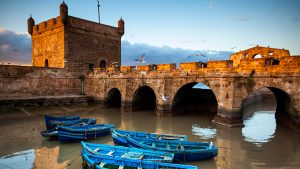
  • Don’t miss the Skala de la Ville, the old city ramparts with stunning ocean views and historic cannons.

2. Essaouira Port

  • A lively place to see fishermen bringing in their daily catch.

  • Visit the blue fishing boats and enjoy fresh grilled seafood right by the water.

  • Great spot for photography, especially at sunset.

3. Skala du Port (Fortress)

  • Climb the old Portuguese fortress for panoramic views of the Medina and Atlantic Ocean.

  • Fans of Game of Thrones may recognize this location (it appeared as “Astapor”).

4. Essaouira Beach

  • Long, wide, and windy — perfect for kitesurfing, windsurfing, camel rides, or a peaceful walk along the shore.

  • You can rent quad bikes or enjoy horseback riding along the beach.

5. Jewish Quarter (Mellah)

  • Explore the old Jewish neighborhood with its distinctive architecture and history.

  • Visit the Synagogue Slat Lkahal or Haim Pinto Synagogue to learn about Essaouira’s Jewish heritage.

6. Sidi Mohammed ben Abdallah Museum

  • Located in a former mansion, this museum displays local art, musical instruments, jewelry, and historical artifacts from the Essaouira region.

7. Art Galleries & Craft Shops

  • Essaouira is famous for Thuya wood handicrafts, argan oil products, and local artwork.

  • Visit local cooperatives where artisans create unique handmade souvenirs.


🌴 Nearby Attractions

8. Argan Oil Cooperatives

  • Just outside Essaouira, you can visit women’s cooperatives that produce pure argan oil and learn the traditional process.

9. Diabat Village

  • A small village 5 km south of Essaouira — once visited by Jimi Hendrix in the 1960s.

  • You can explore ruins of an old palace, ride camels, or enjoy tranquility away from the main town.

10. Sidi Kaouki Beach

  • About 25 km from Essaouira, it’s a quieter spot popular for surfing and relaxing.

  • Perfect for a half-day or full-day excursion.


🍴 Local Food to Try

  • Grilled fish & seafood platters at the port.

  • Tajine with sardines or seafood.

  • Moroccan mint tea overlooking the sea.

  • Gnawa music cafés for a local vibe in the evening.


🎶 Cultural Tip

  • If you visit in June, don’t miss the Gnaoua World Music Festival, one of Morocco’s best-known music events — a mix of African rhythms, jazz, and blues in Essaouira’s vibrant streets.
 

Sahara Desert is the largest hot desert in the world

  • Stretching from Egypt to Morocco, the Sahara Desert is the largest hot desert in the world, comparable in size to the continental US.
  • While there are many ways to visit the Sahara, possibly the most iconic way is to visit Erg Chebbi, one of Morocco’s many ergs, or seas of sand dunes. Erg Chebbi is often used for films because of its stunning expanse of iconic fire-orange sand dunes.
  • To reach Erg Chebbi, one has to drive for two days from Marrakech through mountains and desert, before switching to a camel for the final stretch.
    I recently visited and, while the sunset and sunrise were unforgettable, the dunes were far from the immaculate waves you see in photos, thanks to the hundreds of ATVs and 4X4s that ride through.

From Marrakech by SUPRATOUR public bus departure at 8.30 am with arrival to Merzouga at p 9m and  Starting from Merzouga Next Day  departure at 8 am with arrival to Marrakech at p 8.30m  /

From Fez by CTM public bus departure at 20.30 pm with arrival to Merzouga at 7.15 am  Start Every days from Merzouga  departure at 7 pm with arrival to Fez at 5.30 am If you are coming from Fes  by CTM public bus departure at 20.30 pm with arrival to Merzouga at 7.15 am

From Merzouga by CTM public bus departure at 7 pm with arrival to Fez at 5.30 am

It’s one of the things for which Southern Morocco is famous. Coming to the Sahara Desert is a great escape from urban centres. Here you have the best golden red dunes, at night the most amazing stars above in the sky, the silence and the legendary local Saharan hospitality.

At Sahara Gate Tours we organize excursions on camels and camel rides. You can simply enjoy a sunrise or a sunset ride on the dunes or you can hike for a few hours to our oasis where you will be welcomed by our team and invited to drink tea in a nomad tent.  For the more adventurous, we have programs for multiple days, disappear off into the sunset, and experience the Nomadic way of life for a few days or longer, the camels will carry your gear, and the nomads will be your guides, your cooks and your story tellers. Explore this diverse terrain and discover the varied landscapes of the desert and see how people live in its challenging environments.

One night special trip to the desert camp in Morocco erg chebbi dunes  Merzouga

You can choose to stay for a night and enjoy the sunrise over the big dune of Erg Chebbi: simply an amazing experience. Leave our hotel by camel at around  16:00 Winter time and at 18.00 Summer time  for a trek to watch the sunset, after that incredible experience, descend to the nomad camp where you will have a traditional Berber dinner round the campfire. The star studded sky will captivate you as you listen to the rhythmical drumming of the local musicians. You will be woken early to ascend the dunes to watch the first rays of the sun as it rises, casting huge shadows and fantastic colours as it chases away the night. Spectacular photos for your Facebook posts!! You return to the hotel where you can shower and freshen up and enjoy our breakfast selection. There is an optional extra if you would like to try sandboarding; we have boards and boots at the hotel.

  • Sunset and Sunrise Trek
  • Night in the Desert Bivouac
  • Multi Day Treks from 2 days to 2 weeks
  • 4 Days / 3 Nights Trek with the Nomads
  • Hiking with Camel Porters and Nomad Guides
  • 4×4 Tours
  • Oasis excursions

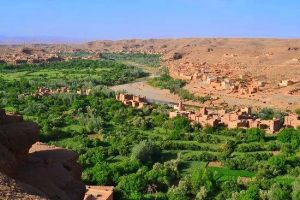
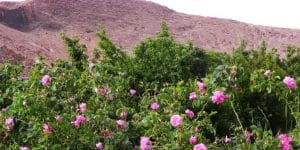
This Rose valley dades Gorges


The gorges are located 110 kilometers from Ouarzazate, south-west of Tinghir. Follow the N10 road from Ouarzazate to El Kelâa and Boumalne Dades, in the heart of the Rose Valley. You can get there by public transit, but the best way to view it is to hire a four wheel drive car, which gives you flexibility and independence in your excursions.


The Valley of Roses Trek in Morocco is a spectacular vacation that not only sees the region’s magnificent rose gardens but also treks along and through the waters of L’Oued M’Goun and deep canyons…. At the heart of the central High Atlas Mountains, on the south side, you will find one of Morocco’s most attractive places, the Roses and Dades Valley, with its stunning rose fields, walled towns, amazing vistas, and where Berber hospitality is still prevalent.

A trip to the Dades Valley

Whether you are a leisure traveler or an adrenaline fanatic, the Dades Valley has fantastic experiences in store for you! The Dades oued, which has its source in the High Atlas, has carved some of Morocco’s most stunning gorges. Hiking, rafting, and rock climbing are all on the itinerary!

The valley’s center is a refuge of freshness and stunning vistas populated by very kind people. Discover the Dades Gorges in the spring, when the valley is teeming with exotic birds. Escape to a garden filled with almond, argan, palm, poplar, and walnut trees.

Top 10 Things to See and Do in Fez, Morocco


Al Quaraouiyine Mosque

Al Quaraouiyine, built in 859 by Fatima al-Fihri, is believed to be one of the oldest universities in the world. It now operates as a mosque and cannot be entered by non-Muslims. However, its library, renovated in 2016, is open to the public, and you can get a glimpse of the impressive, handmade tilework dating back to the 9th century. You can also get a perfect view of the mosque courtyard from the rooftops of nearby restaurants in the medina.

This is the most iconic place in Fez, and the oldest tannery in the world, where they still operate as they did in medieval times. Here, men make leather in a massive tannery surrounded by houses and shops. The smell of the dyeing process can get rather intense, so take a scarf to cover your nose (or they will give you mint leaves to rub under it). This is a great place to buy your leather souvenirs. Fés or Fez (Fas in Arabic) is the third largest city in Morocco, after Casablanca and Rabat, with a population of 946,815 (2004 census).


9 Best Things to do in Casablanca Morocco

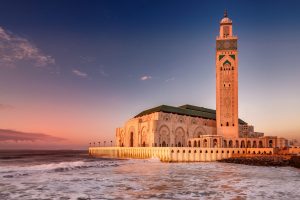
Discover one of the Muslim world’s most important mosques

Constructed less than 25 years ago, the modern-built Hassan II Mosque overlooking the ocean is the second-largest place of Muslim worship anywhere in the world. Gratefully for visitors it is also one of the few open to non-Muslims, meaning everyone can come and appreciate its splendour, regardless of their faith. In fact, the mosque’s beautiful interior can house up to 25,000 people at any one time, while the vast courtyard can accommodate a further 80,000.

Moroccan cuisine is known for its couscous, tagines, mint tea, and other delectable dishes. Visitors to Casablanca may immerse themselves in the city’s rich culinary culture by taking a guided food tour offered by Moroccan Food Tour, a well-known local organization that offers a variety of themed excursions and experiences across the city. During your trip, you’ll visit some of the city’s most well-known foodie hotspots, including as the Central Market and the juice bars along Boulevard Mohamed V, as well as have gourmet teas/coffees at a fine dining restaurant. But maybe the most memorable experience is selecting fish from a local market and then watching it cooked in a modest diner. Your skilled tour guide will provide information along the route.

Best things to Visit in Marrakech

Bahia Palace – Marrakech

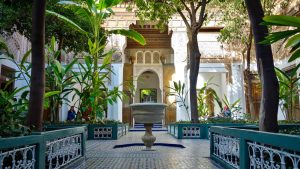
The Bahia Palace is one of Marrakech’s most beautiful historical monuments, built in the late 19th century for the Grand Vizier Si Moussa. Its name means “Brilliance,” and the palace truly lives up to it.
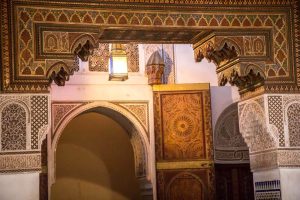
Visitors can admire the stunning Andalusian architecture, intricate stucco work, hand-carved cedar ceilings, and colorful zellige tile floors. The palace’s peaceful courtyards and gardens provide a refreshing escape from the bustling medina.

A visit to Bahia Palace offers a glimpse into the luxurious life of Moroccan nobility and showcases the artistry of traditional Moroccan craftsmanship.


(The Beautiful) is an 8000-square-metre extravaganza of elaborate marquetry, plasterwork, and zouak (painted wood), and is undoubtedly one of Marrakesh’s most eye-catching attractions.

The Petit Riad and Large Riad salons include elaborate marquetry and zouak ceilings, but the Cour d’Honneur, a grand courtyard with a 1500 sq metre floor of Italian Carrara marble, is the undeniable showpiece.

Despite the large amount of space on display, just a section of the palace’s eight hectares and 150 rooms are available to the public. Its large halls occasionally hold significant cultural events.

History
Grand Vizier Si Moussa built the palace in the 1860s, and his son and successor Abu ‘Bou’ Ahmed extended and enhanced it from 1894 to 1900. The Court of Appeal

The salons of both the Petit Riad and Grand Riad host intricate marquetry and zouak ceilings, but the Cour d’Honneur, a grand courtyard, with its 1500 sq metre floor of Italian Carrara marble, is the undisputed highlight.

Despite the vast area on show, only a portion of the palace’s eight hectares and 150 rooms is open to the public. Its grand spaces sometimes play host to important cultural events.

History
Built by Grand Vizier Si Moussa in the 1860s, the palace was later expanded and embellished from 1894 to 1900 by his son and successor Abu ‘Bou’ Ahmed. The Cour d’Honneur (courtyard) was converted into a harem by Bou Ahmed after he became Grand Vizier in 1894. Indeed, the expansion and beautification of Bahia Palace was driven by Bou Ahmed’s desire to accommodate his four wives and 24 concubines.

Bou Ahmed died in 1900, and in 1908 the palace’s beguiling charms attracted warlord Pasha Glaoui, who claimed it as a suitable venue to entertain French guests. They, in turn, were so impressed that they booted out their host in 1912, installing the protectorate’s resident-general in his place.

When Morocco gained independence from France in 1956, the palace was used as a royal residence, until King Hassan II transferred it to the custody of the Moroccan Ministry of Culture, so the building could serve as a cultural icon and tourist attraction.